

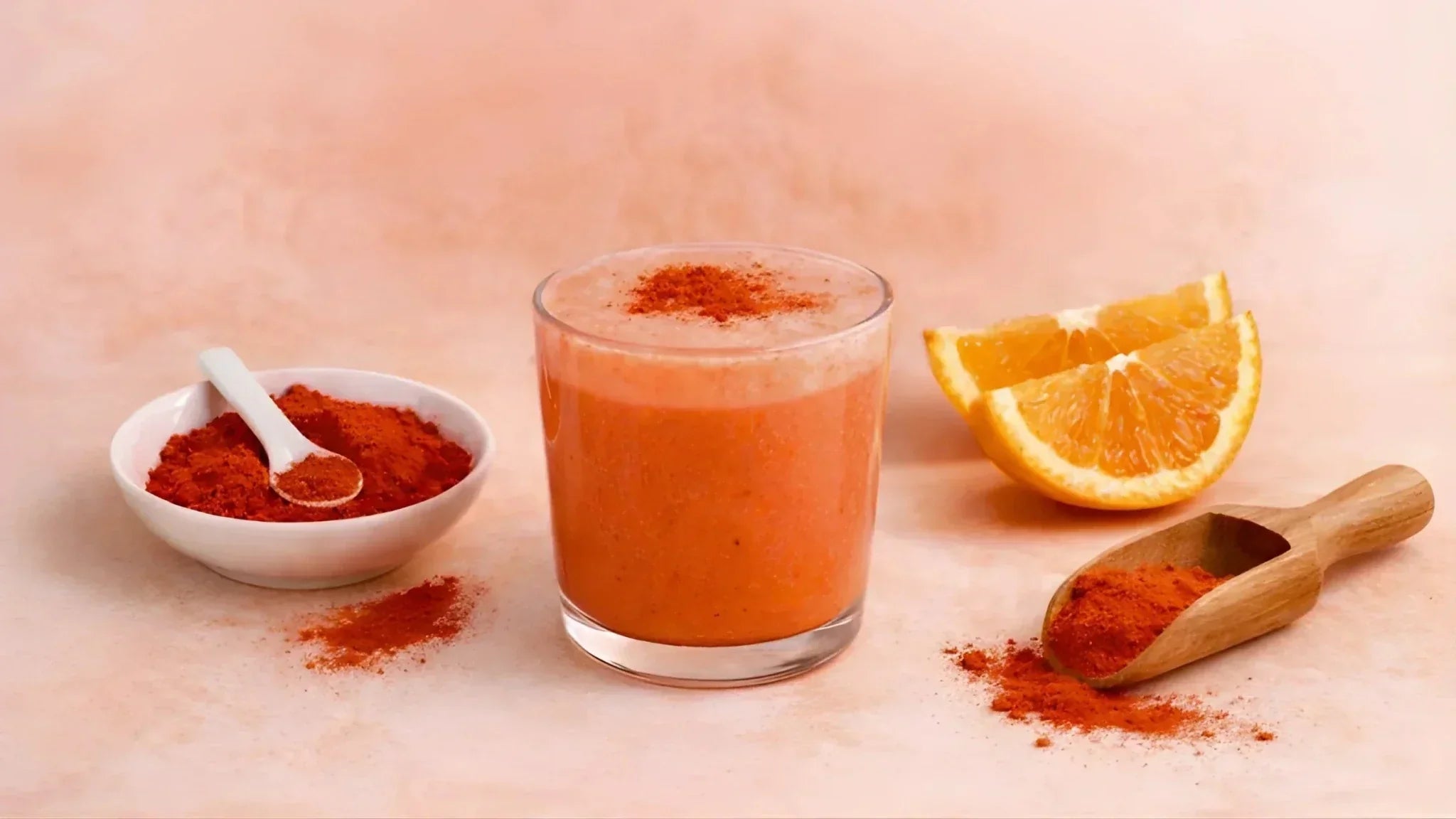
Astaxanthin is the naturally deep red antioxidant pigment made by microalgae. It’s what gives salmon and krill their reddish colour—and it’s become a go-to daily wellness ingredient for people who want targeted antioxidant support in a simple routine.
If you’re new to it, the biggest confusion is usually the same: what exactly is it, where does it come from, and how do you choose a quality product? This guide breaks it down clearly, with practical tips for taking astaxanthin as a powder in smoothies, yoghurt, and everyday recipes.
1) What is astaxanthin?
Astaxanthin (Haematococcus pluvialis) is a red-orange carotenoid—one of nature’s most vivid pigments. In the body, carotenoids are valued for their antioxidant activity, helping to support the body’s defence against oxidative stress created by everyday life (like intense exercise, pollution, and lots of screen time).
Unlike many “general” antioxidants, astaxanthin is fat-soluble, which matters when you’re taking it as a powder. Pairing it with a meal or recipe that includes healthy fats can help your body make better use of it.
Quick snapshot
- Naturally red-orange pigment found in microalgae
- Used as a daily wellness ingredient for antioxidant support

2) Where does it come from?
Most natural astaxanthin comes from a freshwater microalgae called Haematococcus pluvialis. Under certain conditions (like strong light), the algae produce astaxanthin as a protective compound—think of it as the algae’s way of building resilience.
That natural origin is part of what makes astaxanthin easy to position as a “real-food” style supplement—especially in powder form, where you can add it to recipes without needing extra fillers.
What to look for on labels
- A clear source statement (e.g., Haematococcus pluvialis)
- “Natural astaxanthin” (not vague “astaxanthin complex” wording)
- A clearly stated amount per serve

3) Natural vs synthetic (and why source matters)
You’ll see astaxanthin described as either natural or synthetic. The key difference is its origin.
Natural astaxanthin is produced by organisms such as microalgae. This is the form most commonly used in wellness supplements.
Synthetic astaxanthin is made in a lab and is widely used in aquaculture and animal feed (mainly for pigmentation). You might still see it referenced online, which is why it helps to know what your label is actually saying.
Simple rule: if you’re buying astaxanthin for daily wellness, choose a product that clearly states it’s from microalgae and lists the source.

4) What does astaxanthin do in the body?
Astaxanthin is best understood as a targeted antioxidant support ingredient. People commonly add it to their routine to support:
- Skin wellness (especially for those who spend time outdoors)
- Eye comfort and modern screen-heavy lifestyles
- Exercise recovery routines (where oxidative stress can be higher)
Everyone’s routine is different, and research varies depending on the outcome being measured. The most practical approach is to think of astaxanthin like other foundational wellness habits: consistent daily use, paired with good nutrition, sleep, and movement.

5) How to take astaxanthin powder
Because astaxanthin is fat-soluble, how you take it matters.
Best way to take it
- Add it to a recipe that includes healthy fats (yoghurt, milk, nut butter, avocado, chia, olive oil-based dressings)
- Take it with a meal rather than on an empty stomach
- Keep it consistent—same time each day is ideal
Easy everyday ideas
- Stir into yoghurt with berries + a drizzle of nut butter
- Blend into a smoothie with milk (or coconut yoghurt) + banana
- Add to a citrus juice recipe, then follow with a meal containing fats
- Mix into overnight oats with chia and a spoon of nut butter
Colour note: Astaxanthin is strongly pigmented—expect a warm red-orange tone in your recipe. Start small and build.

6) How to choose a quality astaxanthin powder (checklist)
Not all astaxanthin powders are the same. Use this checklist to choose confidently:
Quality checklist
1) Clear source
Look for Haematococcus pluvialis (microalgae) clearly stated.
2) Clear strength per serve
The label should tell you exactly how much astaxanthin you’re getting per serving (not just “extract blend”).
3) Transparency
Prefer brands that explain sourcing and processing in plain language.
4) Testing & purity
Look for evidence of quality control and purity testing (especially for contaminants/heavy metals where relevant).
5) Storage guidance
Astaxanthin is sensitive to heat and light. A quality product will guide you on storage (cool, dry, away from sunlight).
6) Realistic serving size
If a product requires a huge serve to reach a meaningful amount, it may not be practical long-term.

Ready to add astaxanthin to your routine? Explore our Astaxanthin Powder and try it in smoothies, yoghurt bowls, or your favourite wellness recipes.


